

July 2026 Grey Matters

Grey Matters
Jully 2026

Table of Contents
1.) The Next Chapter of GSW Begins 2.) America's 250th Anniversary
3.) A Lesson in Charmcraft 4.) Archetypes in Symbolism, Dreams, and Popular Culture 5.) July 2026 Astrological Forecast 6.) GSW Crossword
The Next Chapter of GSW Begins
By Grey Matters Staff
Announced to the world in an all-school address by Headmaster Kingsley, the Grey School of Wizardry has unveiled its vision of the future of its educational programs. Even as Wizardry, as a perennial trade, has endured by change and wisdom, so too must the Grey School itself undergo change guided by wisdom in order to stay relevant and focused on the future. What exactly is changing, you may ask? A lot, frankly, and more than can be addressed here and now. For the details, kindly click the link below.
Afterwards, you will want to watch the recording from last's night's assembly - which included remarks by GSW Founder, Adeptus Oberon - as well as a Q&A session. You can do so at the link below.
Here is a quick summary that by no means replaces the vital information shared at the links above.
Major Changes for Apprenticeships
A shift away from the work-at-your-own pace model and towards a campus-based learning experience rooted in direct instruction between Apprentices and Faculty.
Greater emphasis on evaluating understanding through conversation and demonstration.
Increased importance on presence in vGSW as a requirement to participate and graduate.
There's much more, of course, but for the details you will need to consult the resources above. Please do so, and familiarize yourself well with them so that you are equipped for the changes and opportunities ahead.
America's 250th Anniversary
By Grey Matters Staff

As America prepares to celebrate its 250th anniversary, we recognize 250 years of American Wizardry as exemplified by the lives and deeds of service performed by some of its most outstanding citizens.
If you haven't done so, we invite you to peruse the articles that are part of our Wizards of America series. In doing so, perhaps you too will be inspired with visions of how you too may serve your community and your country. Click the button below to be transported there!
A Lesson In Charmcraft
By Headmaster Kingsley
Well met Friends and followers all, We hope that the day finds you in good health and high spirits!
Today, we'll be looking at Charmcraft Under the Psychological Model.
Charms are among the oldest and most recognizable forms of magickal work. They may be worn, carried, hidden, gifted, clasped, whispered over, kissed, washed, buried, burned, or passed from hand to hand across generations. In many traditions, charms are described as containers of power. They are said to hold blessings, protections, luck, courage, healing, memory, or warning. Under the Psychological Model of Magick, however, we begin with a more exact question: what is the charm doing to the mind?
This lesson examines charmcraft as a practical psychological art. Rather than treating the object as a mysterious battery filled with undefined force, we’ll study how an object becomes linked to a state of mind, how a moment of presentation can become part of the spell, and how a later trigger can call the charm’s meaning back into active awareness. In this model, the charm works because human consciousness is associative. We don’t remember objects as bare objects. We remember them through stories, touch, emotion, context, repetition, and the conditions under which they first became important to us.
A bracelet given in a moment of love is not only metal, string, stone, or thread. It’s the moment in which it was given. It’s the words spoken when it was placed on the wrist. It’s the warmth of the hand that fastened it. It’s the memory of being seen, valued, and supported. When the wearer looks at it later, those associations can return, and if the charm has been well made, that return may affect posture, breath, confidence, patience, courage, or resolve. That is the basis of charmcraft under the Psychological Model.
This lesson does not require belief in invisible rays, vague energies, or automatic supernatural intervention. It requires attention to the way people form meaning. A charm is a material anchor for a selected psychological state, and the work of the Wizard is to create that anchor deliberately.
By the end of this lesson you should be able to explain how a charm functions under the Psychological Model of Magick and distinguish between decorative symbolism and functional psychological association. The apprentice should also be able to choose an appropriate physical object for charmcraft, create a meaningful moment around that object, explain how the charm may be reactivated later, and describe the difference between vague “charging” language and the deliberate establishment of a mental structure.
~The Psychological Model of Magick~
The Psychological Model understands magick as work performed through consciousness. It concerns attention, belief, memory, expectation, emotion, symbol, imagination, and behavior. Under this model, a spell is effective when it changes the way the practitioner or subject perceives, feels, chooses, and acts. The work may be quiet, but it is not therefore weak. Human beings act from internal states, and those states shape what becomes possible in the world.
A frightened person may avoid a necessary conversation. A calm person may speak clearly. A person who feels alone may withdraw from a task they might otherwise have completed. A person who feels supported may endure difficulty with greater steadiness. If a working changes the internal state from which action arises, it can have practical consequences. Psychological work does not become meaningless because it happens within the mind. The mind is one of the chief places from which action enters the world.
A charm under this model is not powerful because it has been declared powerful. It is powerful because it becomes linked to a mental and emotional condition that can be recalled. The charm is the handle, and the state of mind is what the handle pulls forward. When the wearer touches the charm, sees it, or hears words associated with it, the mind may return to the condition that was established when the charm was made.
For example, an apprentice might create a charm for focus before examinations. If the charm is worn during calm study, associated with clear breathing, touched before beginning work, and linked to a phrase such as, “I return to the task before me,” the object may begin to recall the state of disciplined attention. The power lies in the relationship between the object and the trained mental condition. Without that relationship, the charm is only an object.
~What a Charm Is~
A charm is a physical object intentionally associated with a desired condition, protection, reminder, or pattern of action. Under other models, the charm may be described as holding spiritual force or resonant influence. Under the Psychological Model, the charm is best understood as a deliberately constructed association, shaped through attention and strengthened through use.
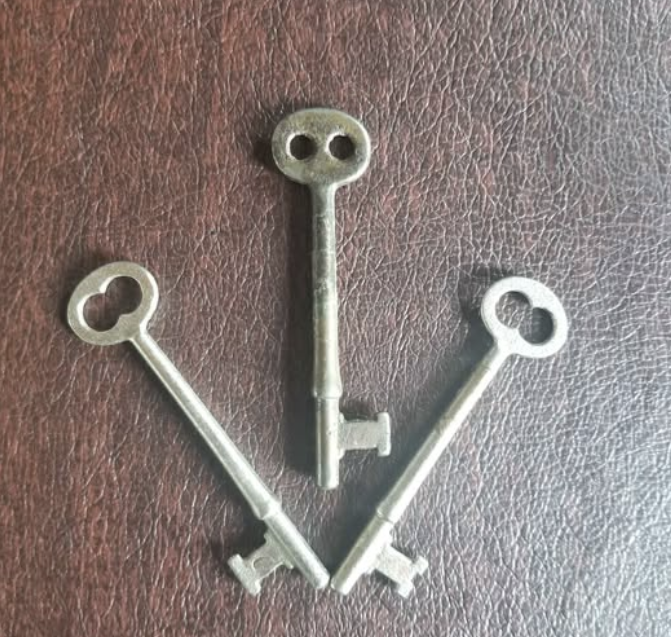
A charm does not need to be elaborate. A necklace, bracelet, stone, key, coin, ribbon, ring, card, bead, or folded note may all serve. The object must be capable of carrying meaning for the person who will use it. The most important quality is not expense, rarity, or antique beauty. It is psychological fit. A cheap object given in the right way may become more powerful than an expensive object given carelessly, because the mind responds to meaning before it responds to price.
A charm works best when the object can be encountered at the moment it is needed. Worn objects are often strong for personal emotional work because they are close to the body and can be touched without effort. A bracelet may be turned between the fingers. A necklace may be held at the chest. A ring may be felt throughout the day. A stone in the pocket may be gripped during anxiety. These physical contacts help recall the charm’s associated state because the body becomes part of the pathway back to the intended condition.
The object should also be chosen carefully because objects already speak to the mind before the Wizard adds anything to them. A ring may imply commitment. A key may suggest access, secrecy, or passage. A mirror may suggest self-regard, revelation, or discomfort. A weapon may suggest conflict. These associations can be useful when they fit the purpose, but they can disrupt the work when they pull the mind in another direction. Charmcraft requires the Wizard to notice what the object already means before deciding what it should be asked to carry.
~Why “Charging” Must Be Specific~
Many beginners are told to “charge” an object without being taught what that means. They may be instructed to place it under moonlight, hold it between candles, breathe on it, pray over it, or imagine it filled with energy. These methods may have value in certain traditions, but under the Psychological Model, they should not be used as empty gestures. A ritual action only helps when it establishes or strengthens a meaningful association.
Moonlight does not automatically make a charm work under the Psychological Model. It may help if the practitioner associates it with calm, reflection, dreams, cycles, secrecy, or restoration. Candlelight may help if it creates focus and solemnity. Breath may help if it links the charm to embodied calm. Prayer may help if it calls forward devotion, confidence, humility, or courage. The action must have a function beyond appearing magickal.
This is where much occult instruction becomes lazy. Words such as “energy,” “vibration,” and “intention” are often used as though they explain the work, when they may only conceal a lack of analysis. A charm is not strengthened by adding more ritual clutter. It is strengthened when each part of the working reinforces the intended state. If the purpose of a charm is courage, then the object, words, setting, posture, and later use should all point toward courage. If the purpose is calm, they should point toward calm. If the purpose is confidence in speech, the charm should be linked to clear voice, steady breath, and remembered support.
The Wizard must know what every element is doing. If an action has no role in the structure, it may be decoration, tradition, or personal preference, but it should not be mistaken for the mechanism itself.
~How a Psychological Charm Takes Shape~
A strong charm under the Psychological Model usually develops through intention, object, moment, phrase, embodiment, and reactivation. These terms should not be treated as a checklist to be recited without thought. They are simply the main pathways through which the charm becomes meaningful enough to work.
The intention is the selected state or function. It should be specific enough that the mind knows what to return to. “Good energy” is too vague to guide the work. “Calm speech during a difficult conversation” gives the mind a clearer path. “Courage” is workable, though “the courage to speak honestly while remaining composed” is better. The more precisely the state is named, the easier it becomes to build the charm around it.
The object is the carrier. It should be suited to the intended use and to the person who will use it. A charm meant to steady the heart may be worn near the chest. A charm meant to support action may be worn on the wrist or hand. A charm meant for reflection may be kept in a pocket, journal, or study space. The object should be available at the moment of need, and it should be something the wearer can encounter without awkwardness.
The moment is the setting in which the charm is established. This may be formal ritual, but it does not have to be. A carefully presented gift, a quiet conversation, a deliberate act of fastening the object, or a shared moment of visualization can all create the charm. The moment tells the mind that this object is now important, and it begins shaping the emotional memory that the object will later recall.
The phrase is the verbal key. It should be short, memorable, and emotionally true. Overly complicated speeches often weaken the work because they scatter attention. A good charm phrase can be remembered in a breath. It should name the state clearly and sound like something the wearer can actually believe.
The embodiment is the physical link between object and body. Placing the necklace around the neck, clasping the bracelet, tying the cord, gripping the stone, or pinning the charm to clothing all make the working more direct. The body remembers through sensation, and a charm that can be touched or felt has a direct path into awareness.
The reactivation is the later cue that calls the charm’s meaning forward. This may be touching the object, hearing a phrase, receiving a compliment, repeating a breath pattern, or noticing the charm at a meaningful moment. Reactivation is often overlooked, yet it is one of the most important parts of the spell. If the charm is never returned to, its association may fade. If it is returned to deliberately, its path grows stronger.
~Presentation as Spellwork~
The presentation of a charm is not merely decoration. Under the Psychological Model, presentation is part of the mechanism. When an object is given casually, it may still be meaningful, but the mind may not mark it as significant. When an object is presented with care, the mind registers the moment differently. A small box, a special pouch, a quiet setting, or the careful act of placing the charm on the wearer can all deepen the association.
The presentation should match the intended state. A charm for courage should not be presented in a way that creates embarrassment or pressure. A charm for calm should not be presented in a chaotic setting. A charm for memory should not be given with distracted or careless words. The emotional atmosphere of the presentation becomes part of the charm, and the object will later recall what was actually present in the moment, rather than what the maker claims to have intended.
This is why a simple gift may become a powerful working. Suppose someone gives a necklace to a loved one before a difficult undertaking. The gift is presented in a small box. The giver asks to place it on them. While fastening it, the giver says, “I got this because I was thinking of you, and I hope when you look at it, you remember that I’m here when you need me.” No moonlight is required. No elaborate ritual is required. The spell is in the meaningful construction of the moment.
The necklace now carries several linked associations: the care of the giver, the act of being adorned, the words of support, and the feeling of not being alone. When the wearer sees or touches it later, those associations may return. The charm has been charged, but not through a vague force. It has been charged through memory, attention, touch, feeling, and word.
~The Charm as an Anchor~
In ordinary life, people already use anchors without calling them magick. A wedding ring may recall commitment. A military medal may recall service. A family recipe may recall ancestry. A school crest may recall belonging. A song may return someone to a summer years past. A scent may bring back grief or comfort with startling force. Human beings are associative creatures, and memory often arrives through the body before it arrives through deliberate thought.
Charmcraft uses this tendency deliberately. The Wizard does not wait for meaning to accumulate by accident. The Wizard designs the conditions under which meaning attaches. The first moment establishes the association, and later contact strengthens it. Each time the wearer touches the charm and remembers the intended state, the pathway becomes easier to access. The object becomes familiar as a doorway into that condition.
For this reason, a charm should not be ignored after it is made. It should be used. A charm for calm may be touched during breathing practice. A charm for study may be placed on the desk before work begins. A charm for courage may be held before speaking. Repetition gives the mind a path to follow, and the more natural that path becomes, the more readily the charm can call the state forward when it is needed.
~Reactivation and Timing~
A charm often needs to be reactivated near the moment of use. This does not mean the original working has failed. It means the association is being brought into active awareness. A memory may exist quietly in the background until something calls it forward, and reactivation is the art of calling it forward at the right time.
Reactivation should be subtle enough that it does not create resistance. If a person is already afraid, saying “remember the courage charm, this is the big moment” may increase pressure. A softer cue may work better. A compliment, a touch, a brief phrase, or a shared glance may draw attention to the object without burdening the wearer.
For example, if a bracelet was given as a support charm, the giver might later say, “That bracelet looks lovely on you.” This draws attention back to the object. The wearer notices it, remembers the moment it was given, and may feel again the support attached to it. The phrase does not need to explain the whole working. In fact, explaining too much may weaken the effect by making the moment self-conscious.
The best reactivation feels natural. It helps the wearer return to the intended state without making them feel watched, managed, or pressured. The charm should open a path, not add another weight to the moment.
~Case Study: A Charm for Steady Speech~
Consider a person who is preparing for a difficult conversation and finds that the real obstacle is not ignorance of what must be said, but the emotional threshold that has to be crossed before speech becomes possible. They may need to apologize, reveal something personal, ask for help, set a boundary, or speak honestly after a long period of avoidance. In each case, the practical problem is the same: the person can imagine the words clearly enough in private, yet when the moment approaches, the body tightens, the breath shortens, and the mind begins searching for escape. A charm for steady speech is designed for that precise point of failure. Its purpose is to help the wearer return to composure, courage, and clarity when fear begins to interrupt action.
The object chosen for this work should suit the state it is meant to carry. A necklace may be appropriate because it rests near the throat and chest, where breath, voice, and emotional pressure are often felt. A bracelet may serve just as well because it can be touched quietly during a moment of anxiety, giving the wearer a physical path back to the state established in the working. The object should be simple enough that its purpose remains clear, and it should not carry a stronger competing meaning that would distort the charm. A beautiful object may help, but beauty alone is not the mechanism. The charm works because the object becomes bound to a remembered state, and the Wizard must therefore choose something that can carry that state cleanly.
The creation of the charm should be calm, deliberate, and emotionally honest. If the person is making the charm for themselves, they might sit quietly with the object in hand and speak a phrase that names the condition they wish to return to, such as, “When I touch this, I return to steady speech.” If the charm is being given by a trusted partner or companion, the moment of presentation becomes part of the working. The object might be placed in a small box or pouch, offered with care, and then fastened or placed on the body with a few sincere words. A phrase such as, “I chose this because I wanted you to have something that reminds you to breathe, speak plainly, and remember that you’re supported,” gives the mind a clear association without turning the moment into a performance. Under the Psychological Model, the words, the touch, the setting, and the emotional tone all become part of what the object later recalls.
Once the charm has been established, it should be used in a way that strengthens the pathway back to the intended state. The wearer might touch the necklace before entering the room, close their fingers around the bracelet while taking a breath, or repeat the operative phrase inwardly before beginning the conversation. The charm does not need to announce itself. It works best when its use feels natural enough that the wearer can return to it without embarrassment or strain. If another person helped create the charm, they may later reactivate it with a gentle comment such as, “I’m glad you have that with you today,” provided the words fit the moment and do not add pressure. The purpose of reactivation is to draw attention back to the object so the original state can rise again.
This case also shows why psychological charmcraft requires precision. The object will carry the actual emotional pattern placed into it, rather than the one the maker claims to have intended. If the charm is created in panic, it may recall panic. If it is presented with pressure, it may recall obligation. If the words are too dramatic, they may make the future moment feel heavier instead of easier to approach. A well-made charm for steady speech is therefore built through exactness rather than spectacle. The object, the phrase, the setting, and the later use all point toward the same state, allowing the wearer to reach for the charm and find composure waiting there.
~The Role of Deity in Psychological Charmcraft~
A deity may be included in charmcraft under the Psychological Model, but the function should be understood clearly. In this model, a deity may serve as an archetypal focus, devotional support, symbolic witness, or image of a desired virtue. A deity associated with speech may help the practitioner gather confidence around communication. A deity associated with the hearth may help frame the work around family and home. A deity associated with courage may help the practitioner imagine strength in a form the mind can grasp.
The deity is not always the engine of the spell. In many Psychological Model workings, the deity functions as a symbolic lens through which the practitioner organizes emotion and intention. If invoking a deity makes the working more vivid, more focused, and more emotionally compelling, it may help. If it makes the work vague, grandiose, or dependent on external rescue, it may weaken the spell.
For first-year work, it is often better to begin with the object, the intention, and the psychological mechanism. Deity can be added once the apprentice can explain what the invocation contributes. A prayer to a patron of speech, courage, or wise timing may fit the working, but the apprentice should still be able to say how that prayer affects the mind. If the answer is only “because the deity will make it happen,” then the apprentice has left the Psychological Model and entered another framework.
~Common Errors in Charmcraft~
One of the most common errors in charmcraft is vagueness. A charm for “good vibes” has little direction because it gives the mind no clear path. A charm for “steady breath before speaking” is stronger because it names the state that should return when the object is touched. The mind responds more reliably to specific pathways than to cloudy wishes.
Another common error is overloading the object with symbols. Beginners often add colors, herbs, runes, stones, planetary signs, divine names, and long spoken formulas because they assume more symbolism means more power. It often means less clarity. Every addition must have a function. If the apprentice cannot explain what a symbol contributes to the intended state, the symbol may only be noise.
A third error is confusing performance with effect. A ritual may look impressive while doing very little to establish the desired association. A quiet, sincere moment may be far stronger than an elaborate ceremony if the quiet moment better reaches the mind. Under the Psychological Model, the question is not whether the working looked sufficiently occult. The question is whether it created a meaningful and retrievable state.
A fourth error is choosing an object with a conflicting meaning. The wrong object may pull against the charm’s purpose. A ring might be too intimate for a simple support charm. A key might be perfect for a charm of access, but awkward for a charm of emotional rest. A mirror might strengthen self-awareness, but it might also awaken self-criticism in someone who already struggles with that pattern. The Wizard must learn to read the object before asking it to serve.
A fifth error is failing to return to the charm after it has been made. The first act establishes the association, but repetition strengthens it. If the charm is created and then forgotten, its meaning may fade. If it is touched, spoken with, worn deliberately, or used at the right moment, its pathway grows clearer.
~Practical Exercise: Creating a Simple Psychological Charm~
Choose one state of mind you would like to strengthen in yourself. Suitable examples include calm focus, patience, courage, careful speech, study discipline, or emotional steadiness. Avoid choosing a goal so large that the charm becomes vague. The charm should support a specific internal condition that can be named, recognized, and returned to.
Select a physical object that can reasonably carry this state. It may be something you wear, something you carry, or something you keep in a place where the desired state is needed. Consider what the object already means to you before beginning the work. If the object has a personal history, decide whether that history supports or interferes with the intended state. A charm should not be forced to carry a meaning that the mind will constantly resist.
Create a short operative phrase that names the state clearly. It should be no more than one or two sentences, and it should sound like something you can honestly say. “When I touch this, I return to calm attention” would serve for a focus charm. “This reminds me to speak carefully and with courage” would serve for a charm of steady speech. The phrase should be easy enough to remember when you are tired, anxious, distracted, or under pressure.
Now create the charm. You may do this through a simple ritual, a quiet moment of focus, a spoken phrase, breathwork, visualization, meaningful placement, or a combination of these methods. The method is less important than the clarity of the association. As you work, pay attention to how the object, words, body, and emotion are being linked. Notice what state is actually present, because that is what the charm is most likely to recall later.
~The End of Our lesson, for today at least~
So, what is Charm Craft? Charmcraft under the Psychological Model is the art of making meaning portable. The Wizard takes an object and binds it to a state of mind through attention, emotion, word, touch, and repetition. The charm becomes a point of return. It helps the mind find its way back to courage, calm, focus, patience, or whatever condition has been deliberately established.
The lesson for the apprentice is simple but demanding: do not hide behind vague occult language. A well-made charm is not a pile of symbols but rather a keenly crafted and precise instrument of memory and will.
Archetypes in Symbolism, Dreams, and Popular Culture
By Prefect Timothy Munroe, Assembly of the Silent Shadows
Introduction
Jung (1975) describes the concept of the archetype in his work; Structure & Dynamics of
the Psyche, as; the unadulterated essence that subliminally and instinctively induces man to
speak and to act in ways that man is not even aware are happening (Jung, p.210, 1975). While
Tau Peristera (2007) in the lesson Introduction to Archetypes for The Grey School of Wizardry wrote that the word has its origins in the Grecian words arch meaning "first principle" and tupos meaning "impression” (Peristera, 2007, para. 3). In this paper, this apprentice will discuss archetypes, their function in the individual and in society, lessons that can be learned from archetypes and a few other aspects of these schema.
Role and Function of Archetypes
This apprentice finds that the function and role of archetypes is to serve stories for
people’s entertainment, and inspiration. While Tau Peristera (2007) wrote that they act as “the original pattern” (Peristera, 2007, para. 2) archetypes are very commonly used in storytelling. In story they give the observer of the story an example of what the perfect hero, guide or fool might act like in any given circumstance.
Within Individuals
Archetypes are also used in the Enneagram, and in the lesson The Basic Types part of
the class The Enneagram: Models of Personality nine different personality or archetypes are
explored and discussed. This use of archetypes in the Enneagram and the method of astrology and the way in which horoscopes are created and read for both entertainment and advice giving are both examples of how archetypes can be used for individual use.
Within Society
Astrological readings and tools like horoscopes and the Enneagram allow for use
societally in ways that allow broad lenses to be applied to large populations of people. When
looking through these lenses people can assign virtues and stigmas and other attributes more
easily without having to spend large amounts of time actually acquiring and compiling data that would justify the attributes assigned to these people. For instance The Hero’s Journey and The Fool’s Journey can both be assigned to people and the characteristics of the people that correspond to those archetypes will not be exactly the same for all the people in those
groupings, but they will be similar due to belonging to the same type of archetype.
Which archetype is most relevant personally
This apprentice feels most connected to the Fool at this point in time. This apprentice is
working on composing a play in accordance with the Fool’s Journey and the new knowledge
obtained relating to the Fool and the journey only kindles a deeper connection between this
apprentice and that particular archetype.
Lessons to be learned from the archetype
In a deck of Tarot cards there are 22 cards in the Major Arcana. The Fool being the first
card in that specific series. The Fool in the journey then goes through 21 different lessons. In
writing the play about this journey this apprentice is finding deeper meaning in many of the
lessons that have been learned both in life and on the path of wizardry. Additionally each tarot deck tells the story with slight variations making the lessons potentially infinite. Some of the lessons pertain to how to incorporate victory, strength and justice into daily life, and how to act in ways that benefit others in positive ways and help to encourage their own sense of victory, strength and justice in their own lives.
Relating to and the significance of the archetype
This apprentice relates to the archetype of the Fool, as the Fool claims to know nothing
and yet sets out on an adventure, a journey. On the journey the Fool learns many things from
many powerful archetypes; the Magician and the High Priestess for instance. This apprentice
relates to the not claiming to know anything and yet setting out on an adventure, in the sense
that this apprentice has claimed to know things and has been proven wrong when claiming to
know these specific things. However, when this apprentice has not claimed to know something, and has merely just witnessed an event without claiming to know any specific thing in that event, it has proven to be an interesting unfolding of the event merely acting as an observer and not as a self-appointed judge and jury. The conclusion to such witnessing is wildly freeing in the emotional connection and outcome to an event and it allows this apprentice to let an event unfold without needing to attempt to sway the outcome of the event one way or the other. This freedom, in this apprentice’s opinion, completely corresponds to the Fool’s freedom at the beginning of the journey.
How does understanding an archetypes nature inform one’s wizardry
This apprentice has felt the weight of bearing many metaphorical mantles of archetypes
over the years. Poet, King, Healer, Hero, and Teacher to name a few. Having an understanding of the nature of the archetype helps relieve some of the burden of feeling like one needs to live up to the stereotypical assumed natures of these roles. For instance, in assuming the role of the Fool, and merely heading out on the journey, and not making judgements about whether the journey will be successful, or whether or not this apprentice even has the right amount of money, time or skill to even go on the journey, the just allowing things to unfold and acting as witness to the unfolding of these things is allowing for an unexpected path of growth in the trade of wizardry. This apprentice is finding that through working with the Fool as an archetype that the focus of service to others is more greatly able to be realized as the Fool is not prideful, nor self-aggrandizing. The Fool is not a commander of others, nor is the fool assuming themselves to be above others. These are all issues that this apprentice has dealt with in the past when working with other archetypes and this has greatly affected this apprentice’s ability to serve community in a positive and meaningful way.
One’s relationships with others
This apprentice continues to make greater and greater efforts to serve others and to
view others experiences with empathy and without judgement. This apprentice tries to make
others feel valued and validated and continues to work to make the world a better place for the future generations to come. This has been greatly affected by the switching of household roles with the mother of this apprentice’s children. Upon taking up the stay-at-home parenting duties this apprentice felt and found a side of life open and able to be expressed that wasn’t able to be expressed while maintaining the daily routine of going to work and running a construction business side of life. The archetypal roles that dwell in the household and care for the children and make sure the occupants of a household are clean, cared for and fed are vastly different from the archetypes that are expressed through going to a job or running a daily business.
One’s relationships with self
It is in the welcoming of the experience of acting as the stay-at-home parent without
judgement and the welcoming of the experience of working with the archetype of the Fool
without allowing preconceived notions and ideas to cloud and muddy the potential outcomes of these experiences that this apprentice has found greater pools of understanding and empathy for others, and greater understanding and empathy for the self.
Conclusion
In conclusion this apprentice finds that while in the young adult days of life this
apprentice yearned to be the Hero, the King, and in the mid-life days, this apprentice felt the
mantle of Wise-one to fit in a way that Hero and King did not. It is only in the last few weeks
that this apprentice has actively taken on the role of Fool and felt at home and at peace.
This paper works to describe and discuss different archetypes, their function in the
individual and in society, as well as various lessons that can be learned from archetypes and a
few other aspects of these schema.
References
Jung, C.G. (1975). Structure & Dynamics of the Psyche. Princeton University Press. New
York. ISBN: 0-691-09774-7. Retrieved on 6/1/2026. From:
Peristera, Tau (2007). Introduction to Archetypes. Archetypes 401: Introduction. © (2018) The Grey School of Wizardry. Retrieved on 6/1/2026. From:
The Grey School of Wizardry. (2003-2026). The Enneagram: Models of Personality. The
Basic Types. Retrieved on 6/1/2026. From:
July 2026 Astrological Forecast
By Grey Matters Staff

The month opens with Mercury retrograde in Cancer, lasting until July 23. Since Cancer rules home, family, memory, and emotional safety, this retrograde may bring a combination of communication and technical glitches and as well as digging up old memories. Conversations may circle back to unfinished family matters, plans may wobble, and messages may need a second look before they are sent.
Then comes July 4, when Mars meets Uranus in a charged conjunction. Sudden changes, bold decisions, surprising breakthroughs, and unexpected disruptions may all arrive under this influence. Work, technology, travel, and personal projects may feel especially unpredictable. Yet, properly handled, this energy can break open a stuck situation and reveal a path forward.
On July 7, Neptune stations retrograde, pulling the curtain back on dreams, illusions, and long-term hopes. What once looked glamorous may become more complicated, but what once seemed impossible may also begin to feel strangely realistic. This is a useful moment for asking whether a cherished vision still serves you or whether it has become a burden.
Venus enters Virgo on July 9, cooling some of the month’s drama with a more practical approach to love, friendship, beauty, and money. Relationships benefit from thoughtfulness, consistency, and honest boundaries. Small acts of care matter now. So do good manners, clear expectations, and knowing when enough is enough.
The Cancer New Moon on July 14 offers one of the month’s most nourishing moments. It is an ideal time to set intentions around home, family, emotional healing, and personal security. What would make you feel safer, steadier, and more rooted? What needs to be released from the household or the heart?
By July 22, the Sun enters Leo, and the mood begins to change. After weeks of reflection, repair, and emotional recalibration, Leo season opens boldly. Creativity, pleasure, confidence, romance, and self-expression come forward.
Mercury stations direct on July 23, helping conversations and plans regain momentum. While it is still wise to move carefully for a few days afterward, the mental weather begins to clear. Misunderstandings can be sorted out. Delayed plans can resume.
The month closes with the Full Moon in Aquarius on July 29, spotlighting friendships, community, social ideals, and the larger networks that shape our lives. This lunation asks where we belong, where we contribute, and where we may need more freedom. With Saturn retrograde also emphasizing responsibility and commitment, this Full Moon may reveal which obligations are meaningful and which have become shackles.
The major themes of July are emotional awareness, transformation, practical discernment, and renewed self-expression. Early in the month, listen more than you speak. Around July 4, stay flexible and avoid forcing unstable situations. Midmonth, use the Cancer New Moon to set intentions for home, family, and emotional growth. After July 22, let Leo season coax you back toward joy, visibility, and creativity.
GSW America 250 Crossword Puzzle
By Grey Matters Staff
Complete it online at GSW America 250 Crossword Puzzle - Crossword Labs
Or download a PDF:
Last Month's Solution:


Comments